

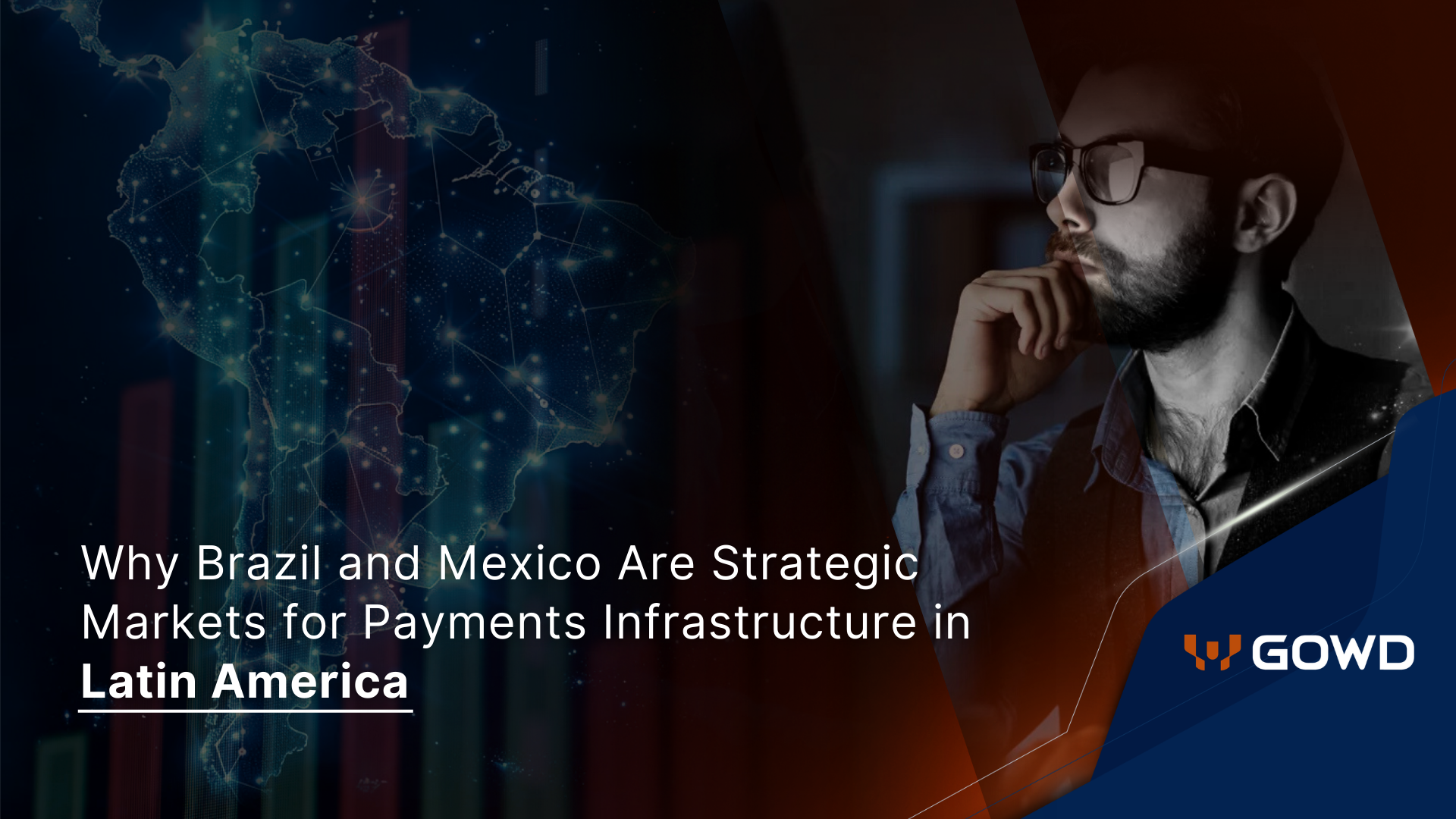
Latin America is undergoing a structural transformation in the payments sector. The expansion of instant payment systems, accelerated financial digitalization, and regulatory evolution are redefining how companies operate across the region.
Among all Latin American markets, Brazil and Mexico stand out as central hubs of this growth. For global companies looking to expand their operations, understanding the strategic role of these two countries has become essential.
The advancement of payments infrastructure in Latin America in recent years, the reguion has experienced:
In recent years, the region has experienced:
• Strong growth in digital payment adoption
• Expansion of the payment service provider ecosystem and financial platforms
• Greater transaction formalization and increased traceability
• Integration between traditional financial systems and emerging digital models
This growth, however, is not uniform. It is led by markets with solid infrastructure and greater regulatory maturity.
Brazil: Scale, Digitalization, and Structured Regulation
Brazil has established itself as the largest digital payments market in Latin America.
The implementation of Pix has accelerated financial digitalization and expanded access to instant payments at scale. In parallel, the Central Bank has taken an active stance in regulatory modernization, increasing requirements around governance, traceability, and compliance.
For international companies, Brazil represents:
• High transaction volumes
• Strong digital payment adoption
• An increasingly structured regulatory environment
This landscape requires infrastructure capable of supporting scale while maintaining operational control and regulatory alignment.
Mexico: Banking Integration and Digital Expansion
Mexico holds a strategic position as the region’s second-largest market.
With SPEI as the foundation for interbank instant transfers, the country demonstrates strong integration with the traditional banking system alongside steady financial digitalization growth.
Additionally, its proximity to the U.S. market and its relevance in international trade make Mexico a key hub for cross-border operations.
Companies operating in the region must understand the operational and regulatory differences between Brazil and Mexico to structure consistent and scalable operations.
Growth and Complexity Go Hand in Hand
As the market expands, regulatory demands increase.
Local authorities have strengthened:
• Governance requirements
• Compliance and AML controls
• Operational monitoring
• Formal structuring of financial flows
Expansion in LATAM is no longer just about technical connectivity. It requires solid operational structure and continuous regulatory alignment.
Infrastructure as a Strategic Factor
For global companies such as exchanges, fintechs, PSPs, and digital platforms, operating in Brazil and Mexico requires more than access to local payment methods.
It requires:
• Predictable operational structure
• Control over flows and balances
• The ability to scale transaction volumes
• Integrated regulatory compliance
Infrastructure is no longer merely technical support — it has become a strategic growth component.
Brazil and Mexico are not just large markets. They are foundational markets for the expansion of financial infrastructure in Latin America.
Companies that understand this dynamic and structure their operations with a long-term perspective will be better positioned to grow with predictability and security.
Learn how GOWD supports companies with payment solutions designed for large-scale operations in Brazil and Mexico.